Part 4: Python Packaging
Turning a script into something you can actually hand to someone.
Where we are
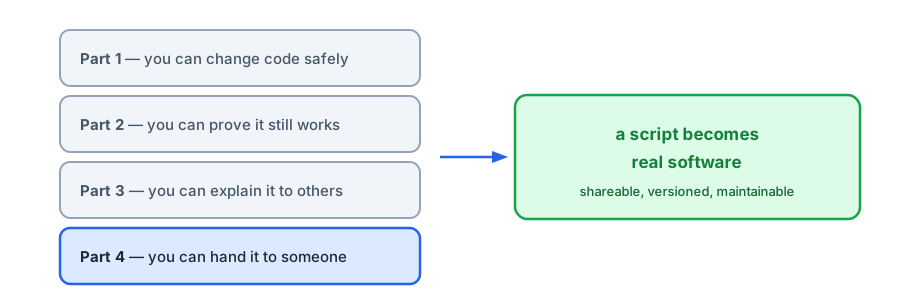
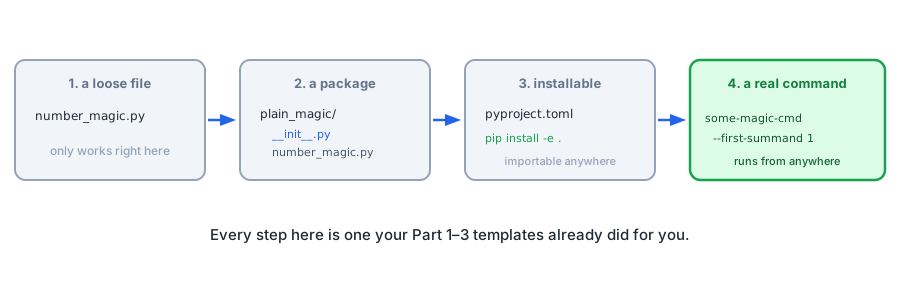
What packaging buys you
installable with
pip install, from anywhereimportable by other projects, with no
PYTHONPATHfiddlingrunnable as a real command, not
python /some/long/path/script.pyuninstallable cleanly, versioned, and depended-upon
The problem, concretely
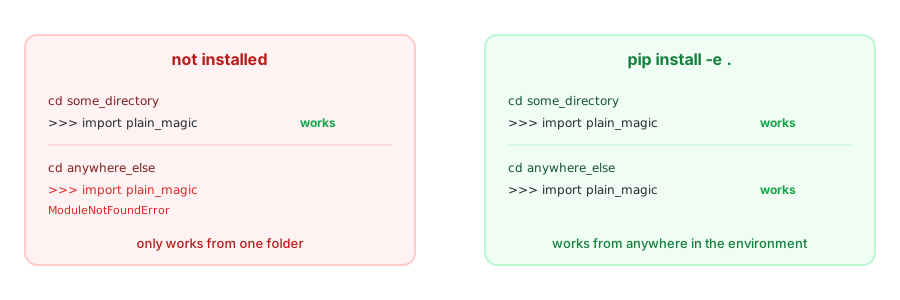
Where we start
number_magic.py
def addition(arg1, arg2):
    """
    This function adds the first and the second argument.

    :param arg1: the first summand
    :return:     the sum of both summands
    """
return arg1 + arg2Five steps
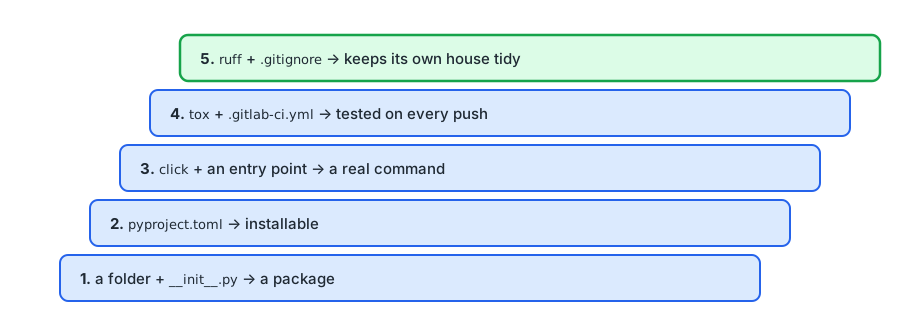
1. A folder makes it a package
some_directory/
   plain_magic/
      __init__.py
number_magic.py2. pyproject.toml makes it installable
[project]
name = "plain_magic"
version = "0.0.1"
requires-python = ">=3.10"
dependencies = ["click"]3. An entry point makes it a command
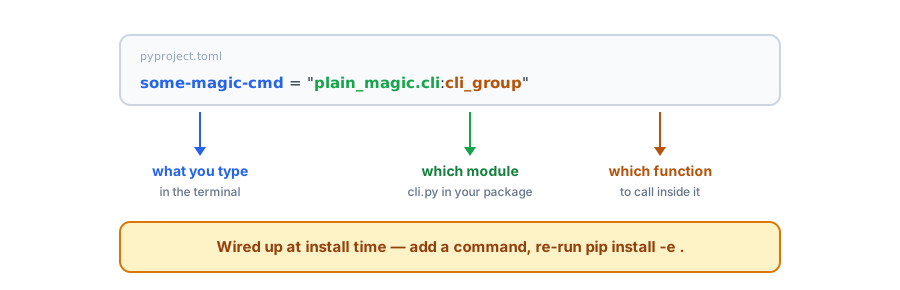
4. tox and CI run the tests for you
[tox]
envlist = py310
isolated_build = True

[testenv]
deps = pytest
commands = pytest5. A linter keeps it tidy
ruff check .
ruff check --fix .…and .gitignore keeps it clean
Virtual environments, caches and build artifacts do not belong in git.
The whole journey
Over to you
Build the package, add a command, wire up CI, and lint it.